AI Detectors
We’ll help you to find the best AI tools for your everyday tasks in work with AI Detectors
91 tools available in this category.
Vocalo↗
38K
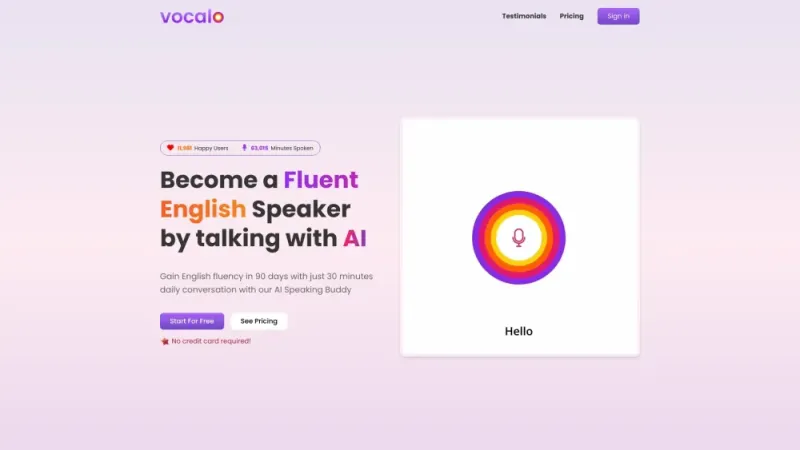
This innovative platform leverages advanced artificial intelligence to transform text into lifelike voice recordings. Users can effortlessly create high-quality audio content by simply typing or uploading their scripts. The service offers a range of customizable voice options, allowing for adjustments in tone, pitch, and speed to suit various needs. Ideal for podcasters, content creators, and businesses, it ensures professional-grade results without the need for expensive recording equipment or studio time. The intuitive interface makes it accessible for users of all skill levels, streamlining the process of generating engaging and natural-sounding audio content efficiently.
 65.80%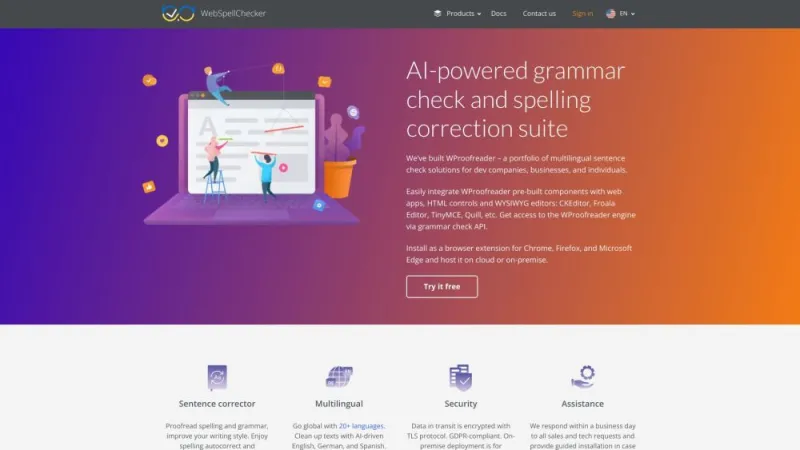
WebSpellChecker↗
35K
This platform offers advanced proofreading and grammar-checking tools designed to enhance written communication. It provides comprehensive solutions for detecting spelling errors, grammatical mistakes, and punctuation issues. Users can integrate these tools into various applications, including web browsers, content management systems, and word processors. The service supports multiple languages, ensuring a broad range of users can benefit from its features. Additionally, it offers customizable dictionaries and specialized terminology support, making it suitable for professional and academic use. With a focus on accuracy and ease of use, this platform helps users produce polished, error-free text across different mediums.
 5.45%
5.45%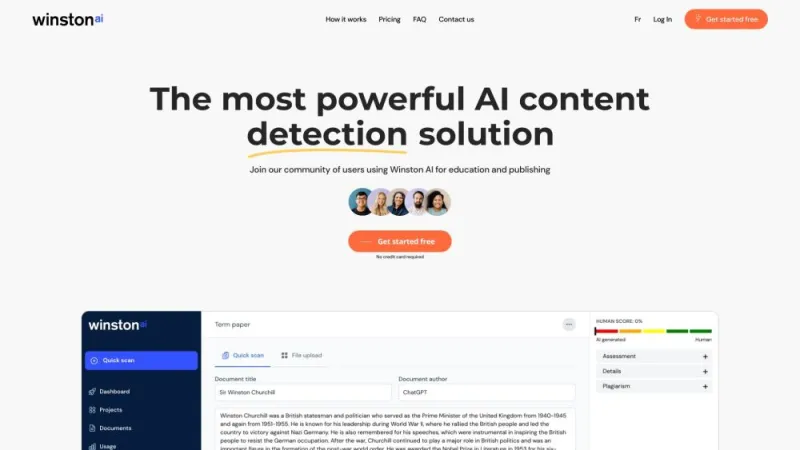
Winston AI↗
321K
This innovative platform leverages advanced artificial intelligence to enhance your writing experience. It offers a suite of tools designed to help you write more efficiently and effectively, whether you're crafting emails, reports, or creative content. The AI-driven features include grammar and style suggestions, tone adjustments, and content optimization tips. The user-friendly interface ensures that both novice and experienced writers can easily navigate and utilize the platform. By integrating seamlessly with your existing workflows, it aims to save you time and improve the quality of your writing, making it an invaluable resource for professionals and students alike.
 33.24%
YourAcademicWriter↗
18K
This website offers professional academic writing services for students at all educational levels. It provides custom-written essays, research papers, dissertations, and other academic assignments tailored to meet individual requirements. The platform boasts a team of experienced writers with advanced degrees in various fields, ensuring high-quality, plagiarism-free content. Users can easily place orders, track progress, and communicate with writers through a user-friendly interface. Additionally, the service guarantees timely delivery, confidentiality, and 24/7 customer support. Special features include free revisions, affordable pricing, and a money-back guarantee, making it a reliable choice for academic assistance.
 5.85%
5.85%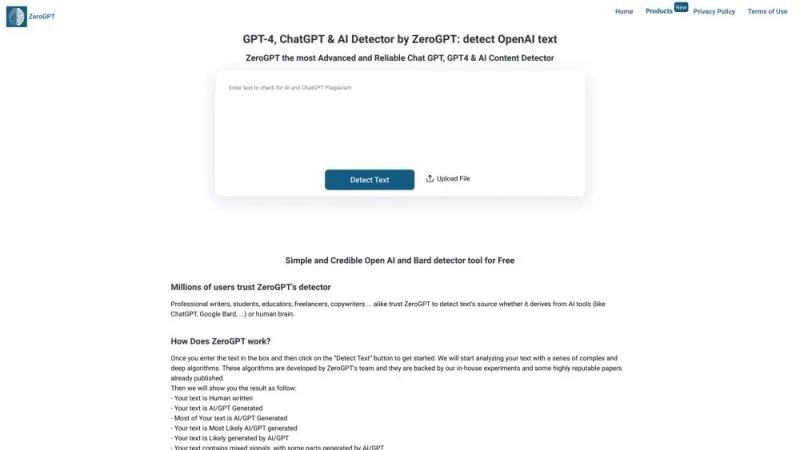
ZeroGPT↗
8M
This website offers a powerful tool designed to detect text generated by artificial intelligence. Users can input text to determine if it was created by AI or written by a human. The platform uses advanced algorithms and machine learning techniques to analyze patterns and linguistic features, providing a detailed report on the likelihood of AI involvement. It is particularly useful for educators, researchers, and professionals who need to verify the authenticity of written content. The user-friendly interface ensures easy navigation, making it accessible for individuals with varying levels of technical expertise. The service is fast, reliable, and highly accurate.
32.69%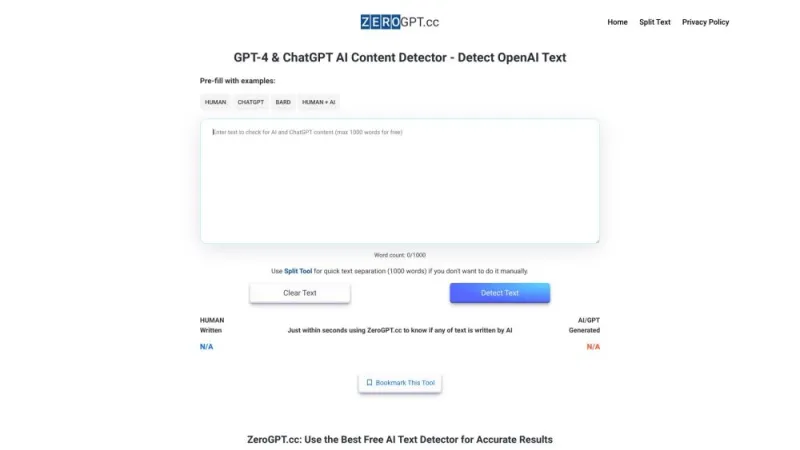
ZeroGPT.cc↗
308K
This online tool is designed to detect AI-generated text with high accuracy. It serves as a valuable resource for educators, content creators, and professionals who need to verify the authenticity of written material. By analyzing text input, the tool can identify patterns and structures typical of AI-generated content, providing users with a clear indication of whether the text is human-written or machine-generated. The user-friendly interface ensures ease of use, making it accessible for individuals with varying levels of technical expertise. This service is essential for maintaining integrity in academic, professional, and creative fields.
39.43%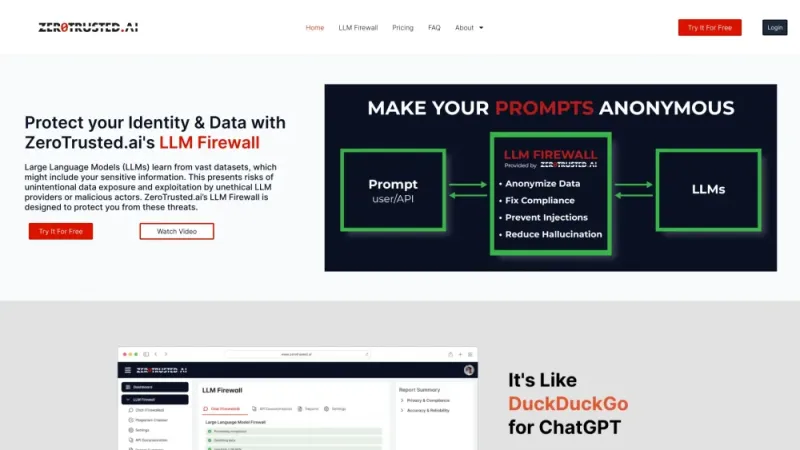
ZeroTrusted.ai↗
< 1K
This website offers a comprehensive platform for enhancing cybersecurity through a zero-trust architecture. It provides advanced solutions for identity verification, access control, and threat detection, ensuring robust protection against cyber threats. The platform integrates seamlessly with existing IT infrastructure, offering real-time monitoring and analytics to detect and mitigate risks promptly. Users benefit from a user-friendly interface, detailed reporting, and customizable security policies tailored to specific organizational needs. Additionally, the site features a wealth of resources, including case studies, whitepapers, and expert insights, to help organizations stay informed about the latest trends and best practices in cybersecurity.
What is AI Detectors
AI Detectors represent a cutting-edge technology designed to identify content, images, or text generated by artificial intelligence systems. As AI-generated content becomes increasingly sophisticated and prevalent, these tools play a crucial role in maintaining authenticity and transparency in digital communications. AI Detectors utilize advanced algorithms and machine learning techniques to analyze various characteristics of content, such as linguistic patterns, stylistic elements, and structural features, to determine whether it was created by a human or an AI system.
The importance of AI Detectors cannot be overstated in today's digital landscape. They serve as a safeguard against potential misuse of AI-generated content, helping to preserve trust and credibility in online interactions. These tools are particularly valuable in fields such as journalism, academia, and content creation, where the authenticity of information is paramount. By providing a means to distinguish between human-created and AI-generated content, AI Detectors empower users to make informed decisions about the information they consume and share.
How does AI Detectors tools work?
AI Detectors operate on complex principles of natural language processing (NLP) and machine learning. These sophisticated tools analyze content through multiple layers of scrutiny, examining various aspects to determine the likelihood of AI involvement in its creation. The process typically involves the following steps:
- Data input: The content in question is fed into the AI Detector system.
- Feature extraction: The system analyzes the content's linguistic features, including vocabulary usage, sentence structure, and stylistic elements.
- Pattern recognition: Advanced algorithms identify patterns characteristic of AI-generated content, such as unusual word combinations or overly consistent writing styles.
- Comparative analysis: The content is compared against vast databases of known human-written and AI-generated texts.
- Probability assessment: Based on the analysis, the system calculates the probability of the content being AI-generated.
- Result output: The AI Detector provides a verdict, often with a confidence score indicating the likelihood of AI involvement.
It's important to note that while AI Detectors are highly sophisticated, they are not infallible. The rapidly evolving nature of AI technology means that these detection tools must continually adapt to new AI writing techniques. As such, the field of AI detection is in a constant state of development, with researchers and developers working tirelessly to improve accuracy and stay ahead of advancements in AI content generation.
Best AI Detectors
The landscape of AI Detectors is diverse, with numerous tools available, each offering unique features and capabilities. When considering the best AI Detectors, several factors come into play, including accuracy, ease of use, integration capabilities, and the range of content types they can analyze. While specific tool recommendations are beyond the scope of this overview, we can highlight the characteristics that define the most effective AI Detectors:
- High accuracy rates: The best AI Detectors boast impressive accuracy in distinguishing between human-written and AI-generated content, with some claiming success rates of over 95%.
- Versatility: Top-tier detectors can analyze various content types, including articles, essays, social media posts, and even code snippets.
- User-friendly interfaces: Intuitive design and clear result presentations make these tools accessible to users with varying levels of technical expertise.
- Detailed analysis: Beyond simple yes/no verdicts, advanced detectors provide in-depth breakdowns of their findings, helping users understand the reasoning behind the results.
- Regular updates: The most reliable AI Detectors are frequently updated to keep pace with the latest developments in AI content generation.
- Integration capabilities: Many leading tools offer APIs or plugins, allowing for seamless integration into existing workflows and platforms.
When selecting an AI Detector, it's crucial to consider your specific needs and the type of content you'll be analyzing. Some tools may excel in detecting AI-generated text but struggle with other media types. Additionally, consider factors such as processing speed, batch processing capabilities, and privacy features, especially if you're handling sensitive information.
AI Detectors Tools
The realm of AI Detectors encompasses a wide array of tools, each designed to address specific aspects of AI content detection. These tools cater to various user needs, from individual content creators to large organizations seeking to maintain content integrity. Here's an overview of the types of AI Detectors tools available:
- Text analysis tools: These form the backbone of AI detection, focusing on written content across various formats and lengths.
- Image recognition systems: Specialized detectors that identify AI-generated or manipulated images, crucial in combating deepfakes and misinformation.
- Audio analysis software: Tools designed to detect AI-generated speech or music, becoming increasingly important in the era of voice cloning and synthetic audio.
- Multi-modal detectors: Advanced systems capable of analyzing content that combines text, images, and sometimes audio, providing a comprehensive detection solution.
- Plagiarism checkers with AI detection: Integrated tools that not only check for copied content but also assess the likelihood of AI generation.
- Real-time content filters: Systems designed for platforms that need to analyze and filter content on the fly, such as social media sites or content management systems.
These tools employ various technologies and methodologies, including machine learning algorithms, natural language processing, computer vision, and acoustic analysis. Many AI Detectors tools offer customization options, allowing users to adjust sensitivity levels or focus on specific types of AI-generated content. Some advanced tools even provide continuous learning capabilities, improving their detection accuracy over time based on user feedback and new data.
AI Detectors Free
In the dynamic world of AI technology, accessibility is key to fostering innovation and maintaining ethical standards. Recognizing this, many developers and organizations offer both paid and free AI detection tools. These free options provide valuable resources for individuals, small businesses, and educational institutions to engage with AI detection technology without financial barriers.
Free AI Detectors often come with certain limitations compared to their paid counterparts, such as restricted word counts, limited daily uses, or fewer advanced features. However, they still offer significant value, particularly for those new to AI detection or with occasional detection needs. Some free tools focus on specific types of content or offer basic detection capabilities, while others provide a taste of more comprehensive solutions through free trials or freemium models.
When exploring free AI Detectors, consider the following points:
- Accuracy: While free tools can be highly effective, they may not always match the precision of premium options.
- Usage limits: Be aware of any restrictions on the amount of content you can analyze or the frequency of use.
- Privacy concerns: Free tools may have different data handling practices compared to paid services. Always review their privacy policies.
- Support and updates: Check how often the tool is updated and what kind of support is available for free users.
- Integration options: Some free tools may offer basic API access or browser extensions, enhancing their usability.
It's worth noting that the landscape of AI detection tools is constantly evolving. As AI technology advances, so do the methods for detecting AI-generated content. This dynamic nature means that both free and paid tools are continually improving, with new options emerging regularly. By exploring the range of available tools, users can find solutions that best fit their needs and budget constraints, contributing to a more transparent and authentic digital environment.