Productivity
We’ll help you to find the best AI tools for your everyday tasks in work with Productivity
330 tools available in this category.
AI Workflow Management23
AI Task Management11
AI Project Management21
AI Scheduling13
AI Notes Assistant16
AI Document Extraction25
AI Team Collaboration25
AI Documents Assistant14
AI Presentation Generator23
AI Meeting Assistant21
AI Video Recording10
AI PDF18
AI Forms & Surveys10
AI Recording2
AI WORD4
AI Files Assistant5
AI Contract Management8
AI Spreadsheet7
AI Diagram Generator7
AI Mind Mapping5
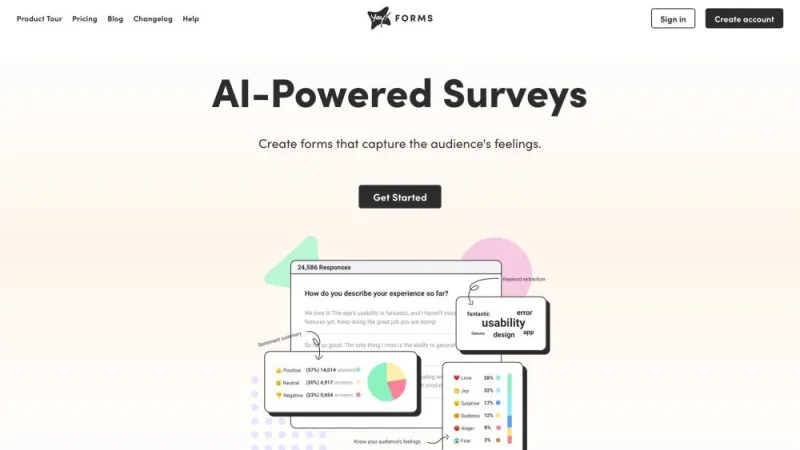
Yay! Forms↗
14K
This website offers a user-friendly platform for creating and managing online forms with ease. It features an intuitive drag-and-drop interface, allowing users to design custom forms without any coding knowledge. The platform supports various question types, including multiple choice, text fields, and file uploads, catering to diverse data collection needs. Users can also benefit from advanced functionalities such as conditional logic, which tailors questions based on previous answers, and real-time analytics for tracking form performance. Additionally, the service ensures data security with encryption and compliance with privacy regulations, making it a reliable choice for both personal and professional use.

YiIotCloud↗
294K
This platform offers a comprehensive solution for the Internet of Things (IoT), focusing on simplifying device management and data analytics. It provides robust tools for real-time monitoring, remote control, and data visualization, enabling businesses to optimize operations and enhance efficiency. The platform supports a wide range of IoT devices and protocols, ensuring seamless integration and scalability. Users can benefit from advanced features such as automated alerts, customizable dashboards, and secure data storage. Designed for both beginners and experts, it aims to streamline IoT deployment and management, making it accessible and user-friendly for various industries.
 22.13%
Yogger AI↗
8K
This platform offers a comprehensive solution for tracking and managing logs, metrics, and traces in real-time. It provides a unified interface for monitoring system performance, diagnosing issues, and ensuring operational efficiency. Users can easily integrate with various data sources, visualize key metrics, and set up alerts for critical events. The platform's robust analytics capabilities enable deep insights into system behavior, helping teams to optimize performance and troubleshoot problems quickly. With its scalable architecture, it accommodates growing data needs and supports a wide range of applications and environments, making it an essential tool for DevOps and IT professionals.
 19.69%
YouChoose↗
< 1K
This app offers a convenient way to make decisions and choose random items. Whether you're indecisive about what to eat, which movie to watch, or need help picking a winner for a contest, this tool simplifies the process. Users can create custom lists of options and let the app randomly select one. The interface is user-friendly, featuring a clean design and intuitive controls. Ideal for both personal and group use, it eliminates the stress of decision-making. Available on iOS, it ensures quick, unbiased choices at your fingertips, making it an essential tool for everyday life.
24.06%
Zapier↗
10M
This online platform automates workflows by connecting different apps and services, enabling users to create seamless integrations without any coding knowledge. It supports over 3,000 applications, including popular tools like Google Sheets, Slack, and Trello. Users can set up "Zaps," which are automated workflows triggered by specific events, to streamline various tasks such as data entry, notifications, and file management. The platform is designed to save time and improve productivity by handling repetitive tasks automatically. It offers both free and premium plans, catering to individuals, small businesses, and large enterprises.
31.47%
Zefort↗
29K
This platform offers a comprehensive solution for managing contracts efficiently. Users can store, organize, and search for documents with ease, utilizing advanced AI technology to extract key information. The intuitive interface allows for seamless collaboration among team members, ensuring that everyone stays informed and up-to-date. Automated reminders help users never miss important deadlines or renewals. Security is a top priority, with robust encryption and access controls in place to protect sensitive data. Integration with various third-party applications streamlines workflows and enhances productivity. Overall, this tool simplifies contract management, saving time and reducing the risk of human error.
 5.91%
5.91%What is Productivity
In today's fast-paced digital world, productivity has become a cornerstone of success for individuals and businesses alike. It refers to the ability to efficiently complete tasks, manage time effectively, and achieve desired outcomes with minimal wasted effort. Productivity tools, powered by artificial intelligence (AI), have emerged as game-changers in this realm, offering innovative solutions to streamline workflows, automate repetitive tasks, and enhance overall performance.
These AI-driven productivity tools cover a wide range of applications, from task management and scheduling to content creation and data analysis. They leverage advanced algorithms and machine learning capabilities to adapt to users' needs, learn from their behavior, and provide personalized recommendations. By harnessing the power of AI, these tools can significantly reduce the time and effort required for various tasks, allowing users to focus on more strategic and creative aspects of their work.
How does Productivity tools work?
AI-powered productivity tools operate on sophisticated algorithms and machine learning models that process vast amounts of data to deliver intelligent solutions. Here's a breakdown of how these tools typically function:
- Data Collection: The tools gather information from user interactions, input data, and sometimes external sources to build a comprehensive understanding of tasks and workflows.
- Pattern Recognition: Using machine learning algorithms, the tools identify patterns in user behavior, task execution, and productivity trends.
- Predictive Analysis: Based on recognized patterns, the tools can predict future needs, potential bottlenecks, and optimal solutions for various tasks.
- Automation: Repetitive or time-consuming tasks are automated, reducing manual effort and the likelihood of human error.
- Personalization: As the AI learns more about individual users, it tailors its recommendations and functions to suit specific preferences and work styles.
- Real-time Optimization: Many tools continuously analyze performance data to suggest improvements and optimize workflows in real-time.
These AI-driven tools can integrate with existing systems and applications, creating a seamless productivity ecosystem. They often feature user-friendly interfaces that make complex AI capabilities accessible to users without technical expertise. As these tools continue to evolve, they become increasingly adept at understanding context, anticipating needs, and providing more nuanced and valuable assistance.
Best Productivity
The landscape of AI-powered productivity tools is vast and diverse, catering to various needs across different industries and personal use cases. While specific tool recommendations may vary based on individual requirements, here are some key categories of AI productivity tools that consistently prove valuable:
- Intelligent Task Management: These tools go beyond simple to-do lists, using AI to prioritize tasks, suggest optimal scheduling, and even automate task creation based on patterns and commitments.
- Smart Writing Assistants: Leveraging natural language processing, these tools help with everything from grammar and style suggestions to content generation and summarization.
- AI-Powered Project Management: These platforms use machine learning to forecast project timelines, identify potential risks, and suggest resource allocation strategies.
- Automated Data Analysis: Tools in this category can quickly process large datasets, identify trends, and generate insightful reports, saving hours of manual analysis.
- Intelligent Meeting Assistants: These AI tools can transcribe meetings, extract action items, and even provide summaries of key discussion points.
- Personalized Learning Platforms: AI-driven learning tools adapt to individual learning styles and paces, optimizing the acquisition of new skills and knowledge.
When selecting productivity tools, it's crucial to consider factors such as integration capabilities with existing systems, scalability, user-friendliness, and data security. The best tools often offer a balance between powerful AI capabilities and intuitive user interfaces, ensuring that the technology enhances rather than complicates workflows.
Productivity Tools
The realm of AI-powered productivity tools is constantly evolving, with new innovations emerging regularly. These tools are designed to address various aspects of personal and professional productivity, each offering unique features and capabilities. Here's an overview of some key types of productivity tools and their potential benefits:
- AI Writing Tools:
- Enhance writing quality and efficiency
- Offer grammar and style suggestions
- Aid in content generation and ideation
- Provide translation and localization support
- Intelligent Time Management Apps:
- Analyze time usage patterns
- Suggest optimal schedules
- Automate appointment booking
- Provide productivity insights and reports
- AI-Powered Project Management Platforms:
- Forecast project timelines and resource needs
- Automate task assignment and prioritization
- Identify potential project risks and bottlenecks
- Generate comprehensive project reports
- Smart Personal Assistants:
- Manage emails and communications
- Schedule meetings and reminders
- Provide personalized recommendations
- Assist with information retrieval and research
These tools leverage AI to learn from user behavior, adapt to individual preferences, and continuously improve their performance over time. By automating routine tasks and providing intelligent insights, they allow users to focus on high-value activities that require human creativity and strategic thinking. As AI technology advances, we can expect these tools to become even more sophisticated, offering increasingly personalized and context-aware assistance.
Productivity Free
In the rapidly evolving landscape of AI-powered productivity tools, users can find a wide range of options to suit various needs and budgets. Importantly, there are both paid and free tools available, each offering unique features and capabilities to enhance productivity and streamline workflows.
Free productivity tools often provide essential features that can significantly boost efficiency without any financial investment. These may include basic task management, simple automation capabilities, or limited-use versions of more comprehensive platforms. They serve as excellent starting points for individuals or small teams looking to explore the benefits of AI-driven productivity enhancement without committing to a paid subscription.
On the other hand, paid tools typically offer more advanced features, greater customization options, and higher levels of support. These may include:
- Advanced AI algorithms for more accurate predictions and suggestions
- Seamless integration with a wider range of third-party applications
- Enhanced data security and privacy features
- Dedicated customer support and regular updates
- Scalability for larger teams or enterprises
When choosing between free and paid options, consider factors such as the complexity of your needs, the size of your team, budget constraints, and potential return on investment. Many paid tools offer free trials, allowing users to test their features before making a financial commitment. Additionally, some platforms adopt a freemium model, providing basic features for free with the option to upgrade for access to more advanced capabilities.
Ultimately, the choice between free and paid productivity tools depends on individual or organizational requirements. By exploring various options and carefully evaluating their features against specific needs, users can find the ideal balance between functionality and cost-effectiveness to maximize their productivity in the AI-driven digital landscape.